Dolphin Tours With a Marine Biologist – Worth It?
Updated August 27, 2026 · 5 min read
Almost every dolphin tour leaving Portimão now advertises the same add-on: “Marine Biologist on Board”. It sounds like paying extra for expertise, and the obvious question is whether that extra is worth it. The honest answer starts with the fact that in Portimão, there usually isn’t one.
The price gap that isn’t there
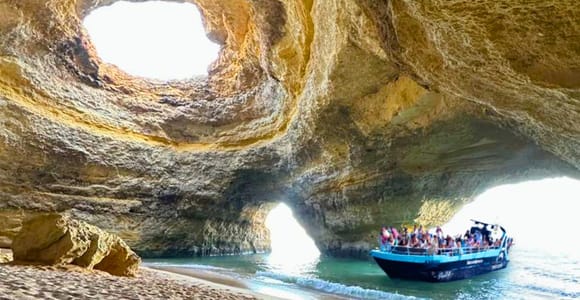
The most-booked tour with a biologist on board costs €40 from Portimão, runs two and a half hours and combines dolphins with the Benagil caves. It holds 4.8 stars from around 4,700 reviews. A catamaran running the same combination, also with a biologist aboard, comes in at €31.
Pure dolphin tours without scientific commentary run between €35 and €50 from Portimão. So the biologist isn’t a premium here — in several cases it’s the cheaper option, simply because the operators who carry biologists run larger boats and spread the cost across more guests.
That changes the question. It isn’t “is the surcharge worth it”. It’s: what does the person on board actually change about what you see?
What a biologist on board actually does
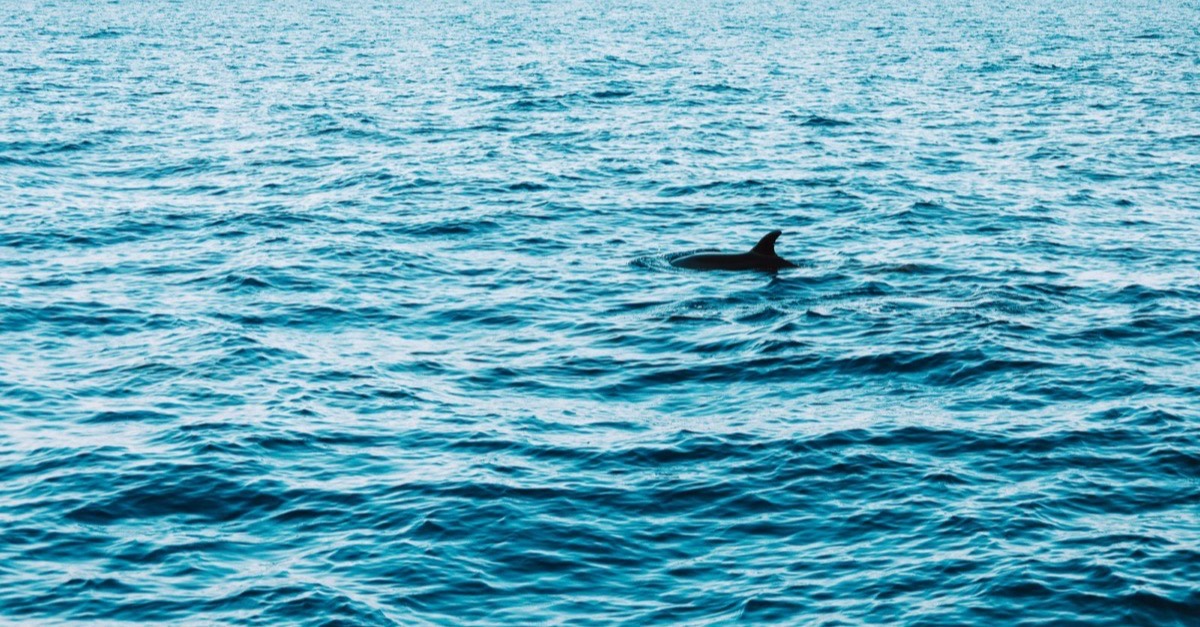
The most tangible part is identification. Three dolphin species turn up regularly off the Algarve, and from twenty metres away they are not easy to tell apart. Common dolphins travel in large, fast pods and are what you’ll see most often. Bottlenose dolphins are bulkier, slower and more curious. Striped dolphins stay further out. Add harbour porpoises, the occasional minke whale, and very rarely orcas. Without someone reading the shape of a dorsal fin, all of it is just “dolphins”.
The second part is behaviour. Whether a pod is hunting, resting or travelling — and why the skipper therefore handles the boat differently. That’s the difference between “there they are” and understanding what is happening.
The third part is data collection, and it’s the most interesting one. The Portuguese research organisation AIMM has worked along the Algarve since 2010 and uses commercial tour boats as research platforms: sighting logs, photo-identification of individual animals by their dorsal fins, behavioural and environmental records. If your boat is part of that, your ticket has a second purpose.
What the law already requires
Here is the point the marketing leaves out: the boat without a biologist isn’t allowed any closer either.
Decreto-Lei 9/2006 governs whale and dolphin watching in mainland Portuguese waters. It requires a licence through the nature agency ICNF, caps the number of boats in the approach zone of a pod at three, limits observation time to thirty minutes, forbids sudden course changes and acceleration near the animals — and bans swimming with wild dolphins outright. Unlicensed boats and jet skis may not approach at all. Licensed operators must show recognised training.
So if you’re hoping the “scientific” boat gets you nearer: that isn’t the difference. The difference is interpretation, not proximity.
Where the label gets thin
“Biologist on board” is not a protected term. The range runs from doctoral researchers collecting data on every trip to third-semester interns delivering a well-rehearsed script. Both are legitimate, but they are not the same thing.
Two questions separate them, and both can be asked before booking: does the data collected feed into publications or a monitoring programme? And is there a named partner organisation? An operator who answers those specifically means it.
A second, less comfortable point: a 2024 study co-authored by AIMM researchers found measurable changes in the whistle patterns of common and bottlenose dolphins when tour boats were present. The tourism that funds the research is also its subject. If you take that seriously, go out once properly rather than three times.
What shapes the trip more than the biologist
In practice, two factors matter more than the label on the booking page.
Group size and boat type. On a boat with twelve guests, you get to the rail when something happens. On a catamaran with sixty, you’re in the second row. Conversely, the big catamaran has shade, a toilet and steadier motion — with children or a delicate stomach, that’s worth more than any commentary.
Time of day. Mornings bring a flatter sea, dorsal fins are visible from much further off, and fewer boats are competing for the three permitted slots around a pod. Which months and hours actually pay off is covered in detail in our guide to the best times for dolphins.
And ask about language. The value of an explanation depends entirely on whether it comes in one you follow easily. Many tours brief in English and Portuguese, some add German — but not all of them.
Who should book which
Go with a biologist if you care what you are looking at, if you have children from around eight who get something out of explanations, or if you want your booking to help fund data collection.
Skip it without hesitation if you mainly want to get out on the water, if the cave combination is the real reason you’re going, or if you prefer a short, fast run — the commentary lengthens the trip.
You’ll find all current dolphin tours from Portimão compared here, along with the calmer catamaran trips and the combinations with the Benagil caves — sorted by real reviews, not by commission.
One last sentence no operator likes to write: nobody can guarantee anything. These are wild animals in the open Atlantic, not fed and not tracked. A biologist on board does not raise your chances of seeing dolphins. It raises what you take home from it.