Bad weather in the Algarve — what then?
Updated August 16, 2026 · 6 min read
You booked the Algarve for the sun, you woke up to grey, and the boat trip you had planned is looking doubtful. Before you write the day off: rain here behaves differently from rain at home, and this region has an inland half that most visitors drive past for a fortnight without noticing.
First, the numbers
Long-term normals for Faro, the nearest station with a proper record — Portimão sits about 60 kilometres west and is marginally wetter in winter — put annual rainfall at roughly 500 mm, spread across a very uneven year.
December is the wettest month at around 91 mm across about twelve rainy days. January, February and March each land somewhere between 45 and 60 mm across five to seven days. July is the driest month on the calendar: something like one millimetre, across roughly one rainy day, and in plenty of individual Julys it simply does not rain at all. Faro records somewhere around 3,100 hours of sunshine a year, depending on which measurement method you trust — sources vary more than you would expect on this figure, so treat it as an order of magnitude rather than a promise.
What that means in practice: if you are here in July or August, a genuinely lost day is rare, and what you are looking at is probably morning cloud that burns off. If you are here between November and February, a wet day is a normal part of the trip and worth planning for rather than resenting.
What actually gets cancelled
Not what you would guess. Rain alone rarely cancels a boat trip — swell does.
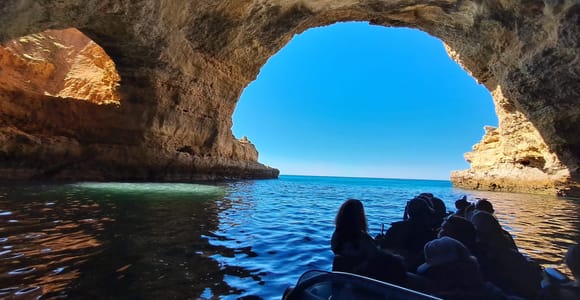
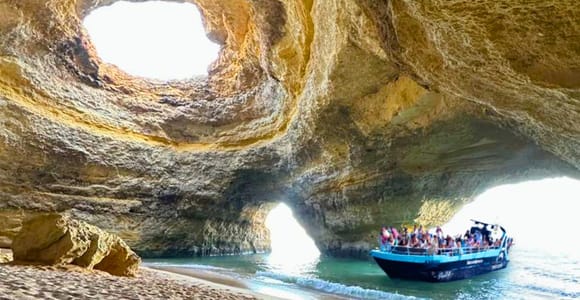
Guided kayak and stand-up paddleboard tours go first, because they need a calm sea to be safe near the cliffs. Small RIB speedboats go next. Catamarans are the most likely to run in marginal conditions, because their width keeps them steady. A cloudless day with two metres of Atlantic swell will cancel more tours than a grey drizzly day with flat water.
If your tour is cancelled by the operator, you are normally offered a reschedule or a refund. If you simply do not fancy going because it looks grey, that is a no-show, not a cancellation — check the terms. Most operators on this coast allow free cancellation up to 24 hours before departure, which is the window that matters.
Portimão’s own wet-weather option
The Museu de Portimão is the most weather-proof thing in the town, and it is a genuinely good museum rather than a way to kill an hour. It occupies the former Feu sardine cannery on the Arade waterfront at Praça 5 de Outubro, a few minutes from where the boats leave. The building has been kept largely as it was: the production lines, the sorting benches, the room where the fish were beheaded. Portimão canned sardines for most of the twentieth century, and this is the industry that built the town you are standing in. Indoor, one to two hours, and it makes the marina outside make more sense.
Silves, the town the coast forgot
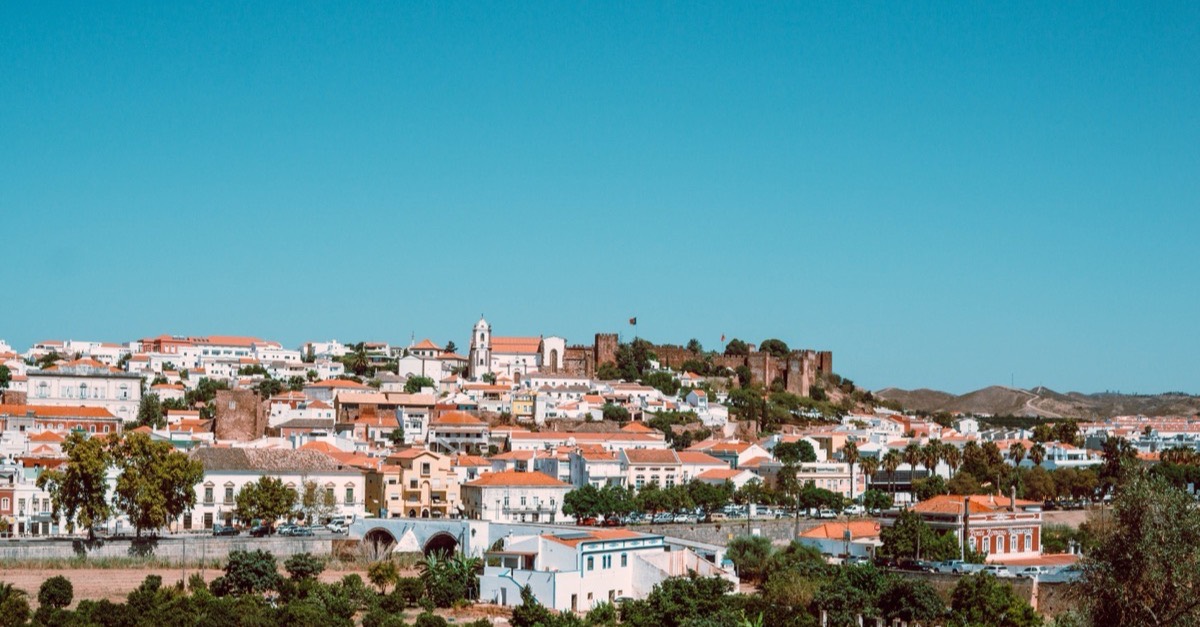
Twenty-five minutes inland from Portimão, Silves was the capital of the Moorish Algarve and is now a quiet red-sandstone town on a hill. The castle is one of the best preserved in southern Portugal, dating in its present form to the eleventh century, and the archaeological museum sits right against the castle walls with material going back well before the Romans.
Be honest with yourself about one thing: the castle is largely open-air. In heavy rain you will walk the walls in a raincoat or not at all. Pair it with the museum, which is fully indoors, and with a long lunch — this is a town where a two-hour lunch is a legitimate activity. Two to four hours covers Silves comfortably, which makes it the ideal half-day when the coast is grey.
Wine, which is entirely indoors
The Algarve’s cellars cluster in the hills between Silves, Lagoa and Loulé, and tasting rooms do not care about the weather. Quinta dos Vales, between Portimão and Lagoa, is the easiest to reach from the coast and pours a serious range.
The catch is the obvious one: someone has to drive back. A tasting is three or four wines minimum, and Portuguese drink-driving limits are strict. If wine is your rainy-day plan, book a tour that includes transport — this is the one activity where the organised version is clearly better than doing it yourself.
Monchique and the food argument
The Monchique hills rise behind Portimão, and Caldas de Monchique has been a thermal spa since Roman times. Fóia, at 902 metres, is the highest point in the Algarve.
Here is the honest version: on a genuinely bad day, Fóia will be inside the cloud and you will see nothing at all. Do not drive up there for the view. Drive up there for the food — mountain restaurants with a fire going, black pork, smoked ham, slow-cooked stews, heavy bread and medronho, the local fruit spirit. If the cloud lifts on the way down, treat it as a bonus.
Things that are wetter than they look
Some standard Algarve suggestions do not survive contact with actual rain, and it is worth saying so.
Jeep safaris are open-sided. On a grey dry day they are excellent — the hinterland, cork oaks, dirt tracks. In steady rain they are a cold, wet afternoon in a vehicle with no windows.
Water parks and Zoomarine are outdoor attractions. A wet day is the wrong day, not the right one, whatever the “things to do in the rain” listicles say.
The coastal walks — including the Seven Hanging Valleys Trail — become slippery limestone above a drop. Save them.
The things that actually work indoors
A pottery workshop, of which there are several around Porches and Silves. A cataplana cooking class, which ends in lunch. A fado evening, which is indoors by definition and better on a dark night than a warm one. The regional train from Lagos through Portimão, Silves and Tunes towards Faro — old, slow, cheap and completely dry, and a legitimate way to see the inland Algarve without driving.
One piece of planning advice
Museums you can walk into. Workshops, wine tours and cooking classes generally need booking, and often a day ahead. Which means the rainy-day plan you make at breakfast on the rainy day is usually too late.
If you are here in winter, book one flexible indoor thing early in the trip and keep it as your rain card. If you are here in summer, do the opposite: book the boat for the first available morning, because the odds are overwhelmingly with you, and keep the museum in your back pocket for the one grey afternoon you probably will not need it.