What to See in Portimão – and What to Skip
Updated September 1, 2026 · 8 min read
Portimão is not a postcard town. If you arrive expecting cobbled lanes and Moorish arches, you will be disappointed — the 1969 earthquake destroyed most of the historic centre, and what replaced it was housing, not scenery. Silves and Tavira look prettier.
What Portimão does have is something else entirely, and it is the real reason to base yourself here: it is a working port town in the middle of the coast. More boats leave from here than from anywhere else between Lagos and Albufeira, the river separates two completely different places, and beaches that take others an hour to reach are twenty minutes away.
This article stays in Portimão and its immediate surroundings — everything you can reach without a car or with a short drive. What lies further out is covered in what to see in the Algarve.
Praia da Rocha – the beach most people come for
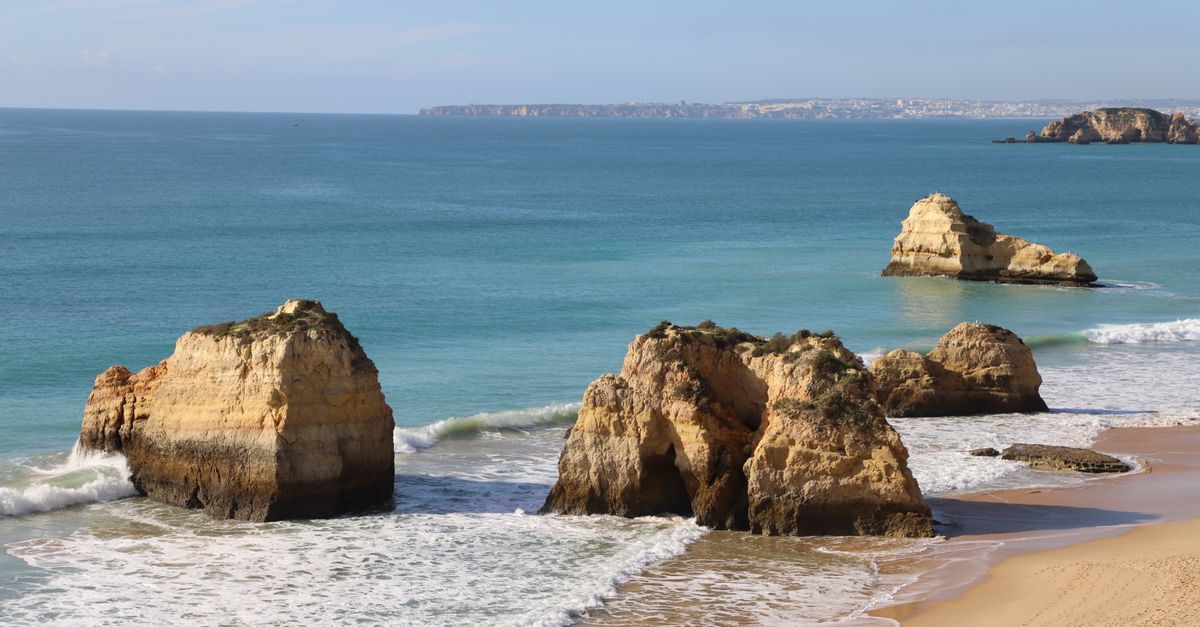
Praia da Rocha is Portimão’s best-known face: about a kilometre and a half of sand beneath a cliff line, studded with the ochre rock stacks that appear on every second Algarve photograph. It has held Blue Flag status since 1987 and is lifeguarded from June to September.
What makes it work: it is unusually wide. Even in August you will find space if you walk five minutes east, towards the fortress. The boardwalk along the beach is free to use and connects the access points, bars and restaurants, so you do not have to climb the cliff stairs each time.
What is missing: shade. The beach is open and broad, and natural shade is essentially non-existent. With small children you need a beach tent, or rent an umbrella — in the concession areas a lounger-and-parasol set usually runs around €10 for half a day. The free stretches in between cost nothing.
Getting there without a car: it is a 25-minute walk from the centre, mostly downhill. City bus 33 on the “Vai e Vem” network runs roughly every half hour to the fortress at the eastern end. A taxi costs about €5–7. By car, the free car park at the Estrada da Rocha roundabout almost always has space, even in high summer, with staircases leading down.
Two free extras: at the eastern end stands the Fortaleza de Santa Catarina, a small 17th-century fort directly above the river mouth. Free, ten minutes is enough, and the view across to Ferragudo is the best in town. At the western end a tunnel through the rock leads to the neighbouring bay, Praia dos Três Castelos, with a viewpoint of the same name above it.
Honestly: Avenida Tomás Cabreira above the beach is a loud bar strip. If you want quiet, do not book a room there. And the jet skis sometimes come closer to the swimming area than you would like with children in the water.
Ferragudo – ten minutes by boat, a different world
Across the Arade on the eastern bank sits Ferragudo: a whitewashed fishing village of narrow stepped lanes, a square with a church above it, boats sitting in the mud at low tide. It is what many people are looking for in Portimão and do not find there.
How to get there: the water taxi leaves from the riverside Zona Ribeirinha near the museum and takes about ten minutes to the Ferragudo quay. In summer it runs roughly every 30 to 40 minutes, usually until late afternoon. Expect around €5–7 each way, and agree your return time when you board, because the service stops earlier in the evening than most visitors assume. The bus over the bridge costs about €2.30 one way and takes a quarter of an hour — cheaper, but without the crossing, which is half the pleasure.
Once there: one to two hours covers the village. If you stay longer, walk to Praia Grande, the flat river-mouth beach — much quieter than Praia da Rocha and with a gentler entry into the water. The striking Castelo de São João de Arade at the mouth is privately owned and cannot be visited; you see it from outside and that is all. Hardly anyone mentions this, and it disappoints people regularly.
Alvor – the longest boardwalk in the Algarve, free
Eight kilometres west lies Alvor, another old fishing village, and behind it the real destination: the Passadiços da Ria de Alvor, the largest boardwalk system in the Algarve. The structure runs some six kilometres through dunes and salt marsh between the village, the lagoon and Praia dos Três Irmãos.
The “Ao Sabor da Maré” circular route starts behind the Alvor sports complex, covers about six kilometres, is flat throughout and has no steps — it works with a pushchair. Access is free, and two large car parks hold over a thousand cars between them.
When it pays off most: late summer and autumn, when the migratory birds pass through. Flamingos, herons, storks and ducks are then a reasonable expectation rather than luck. At midday in high summer the boardwalk is shadeless and hot — go early or towards evening.
Museu de Portimão – the best museum in the western Algarve
The town museum occupies the former Feu Hermanos sardine cannery, a late 19th-century building right on the river. It opened in 2008 and won the Council of Europe Museum Prize in 2010 — deservedly, because the permanent exhibition tells the story of the canning industry on the original site, with the surviving machinery, the production lines and the voices of the women who worked here.
Admission: €3 standard, €1.50 for ages 16–25 and over 65. A combined ticket with the Alcalar megalithic site costs €4. On Sundays entry is free for people resident in Portugal.
Opening hours: from September to mid-July, Tuesdays 2.30–6pm, Wednesday to Sunday 10am–6pm, closed Mondays. From mid-July to the end of August it switches to evening hours until 11pm — a good option on a hot day. Last entry is half an hour before closing in both cases.
Allow a good hour, or an hour and a half with children. Together with the Alvor boardwalk it is the best rainy-day alternative Portimão has.
Marina and harbour – the reason you start here
The Marina de Portimão and the quay in the Zona Ribeirinha are the departure point for almost everything that happens on the water. And that is not a small offer in Portimão: 101 bookable tours and experiences currently leave from this harbour, from €11.45, with a median of €42 and over 71,000 reviews between them.
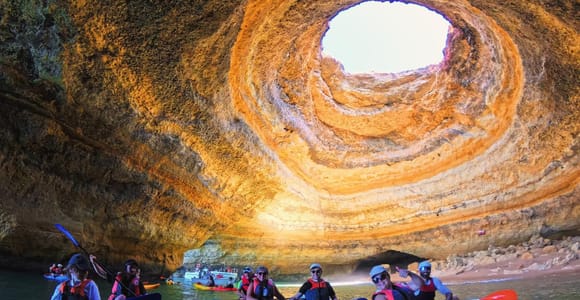
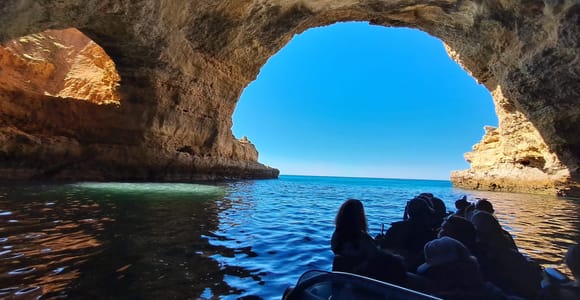
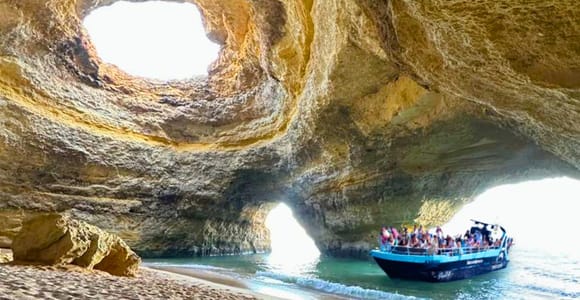
The emphasis is unmistakable. 62 tours alone head for the caves — Benagil and Praia da Marinha are about half an hour east by boat, closer than from Lagos. The town’s most-booked trip costs €12.38, lasts an hour and a half and holds 4.8 stars from over 13,000 reviews.
Alongside that there are 14 sunset cruises from €11.49, 13 dolphin tours from €30, 9 kayak tours from €19.43 and 14 private charters from €120. If you cannot decide between boat types, the differences are set out in what boat trips actually cost, and the categories are here:
- Benagil cave tours — the town’s most-booked experience
- Sunset cruises — the cheapest way onto the water
- Dolphin watching — a real chance of sightings, never a guarantee
- Kayak tours — the only way still to get inside the Benagil cave itself
- Private boat tours — the maths works from roughly six people
- All things to do in Portimão — including what happens on land
Whether you need a boat at all to see the famous cave is covered in Benagil Cave without a boat. And if you are still deciding which harbour to start from, compare them in Portimão, Albufeira or Lagos.
The Zona Ribeirinha and the food
The riverside promenade between the museum and the bridge is the most pleasant part of town for a walk — no traffic, a view across to Ferragudo, light on the water in the evening. Under the old bridge at Largo da Barca sit the sardine restaurants Portimão is known for: grilled sardines, bread, salad, house wine. This is not fine dining and does not pretend to be. Good sardines run from June to October; outside that window, order something else.
What you can skip
- The town centre as a sight. The pedestrian zone around Rua do Comércio is fine for shopping and unremarkable otherwise. An hour is plenty.
- Praia da Rocha between 11am and 4pm in August. The central access points are packed. A five-minute walk solves it, and almost nobody knows.
- The water taxi as an evening return. It stops running earlier than people expect. If you plan to eat in Ferragudo, plan the bus or a taxi back.
Two days, realistically planned
Day one: museum in the morning, sardines at Largo da Barca at midday, water taxi to Ferragudo in the afternoon, back before the service ends. Praia da Rocha and the fortress in the evening.
Day two: an early boat trip to the caves — the first departure has the calmest sea and the emptiest caves. Alvor and the boardwalk in the afternoon, once the heat eases.
None of that needs a hire car. For everything that does, continue here: what to see in the Algarve from Portimão.